SpaceX Prepares Starship Flight 13, Carrying the Lessons of Flight 12 With It
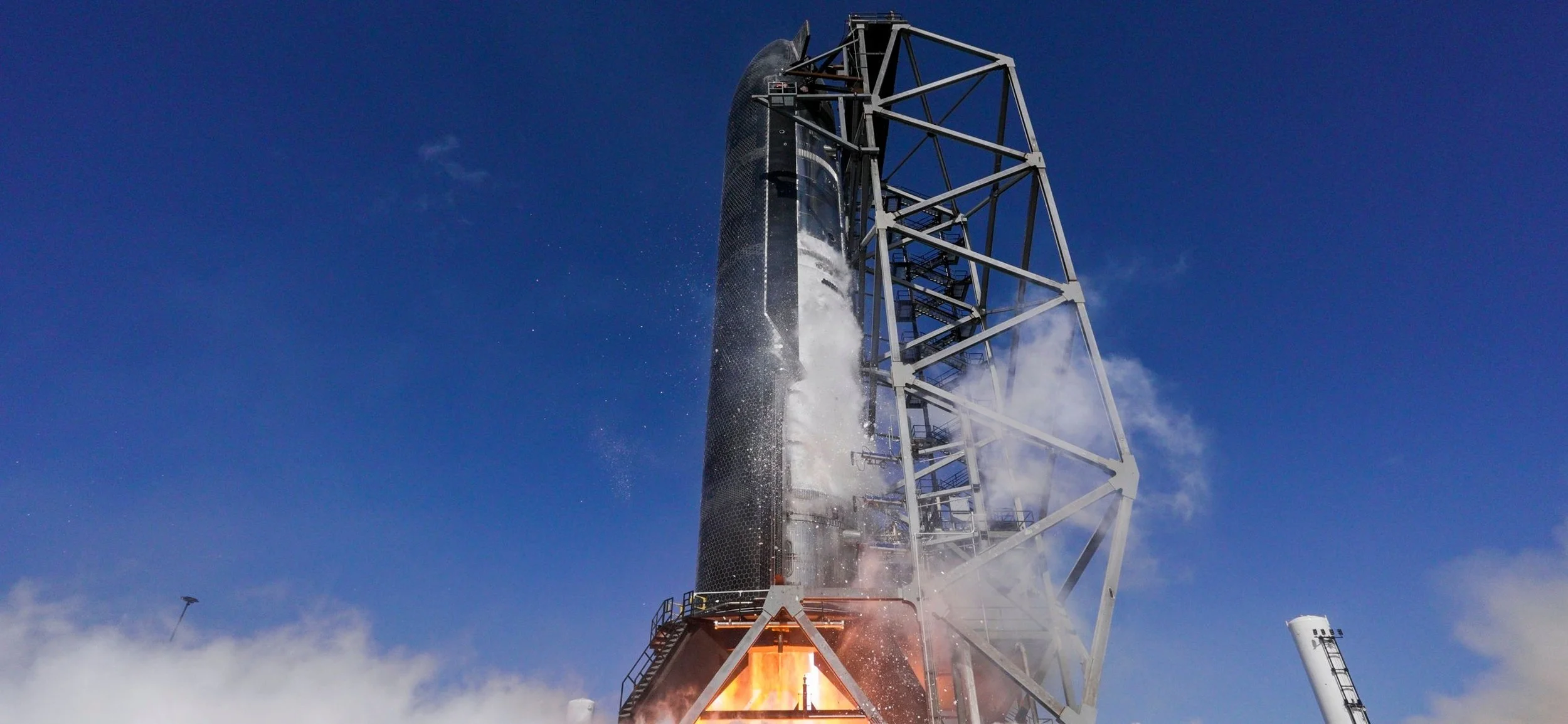
Starship Flight 13 is preparing to launch NET Thursday, July 23rd. The 90 minute launch window opens at 5:45pm CT, with a live webcast beginning 30 minutes before liftoff. This flight aims to complete the same objectives targeted on Flight 12 that debuted Starship V3, while also carrying next gen Starlink V3 satellites for the first time. To see what that debut flight entailed, "Critical Path", the latest episode in SpaceX's ongoing Starship series, follows engineers and technicians through the final days before that launch. Flight 13 picks up the story where that episode left off. The vehicle flying this week is different in specific, deliberate ways because of those lessons learned.
Photo: SpaceX
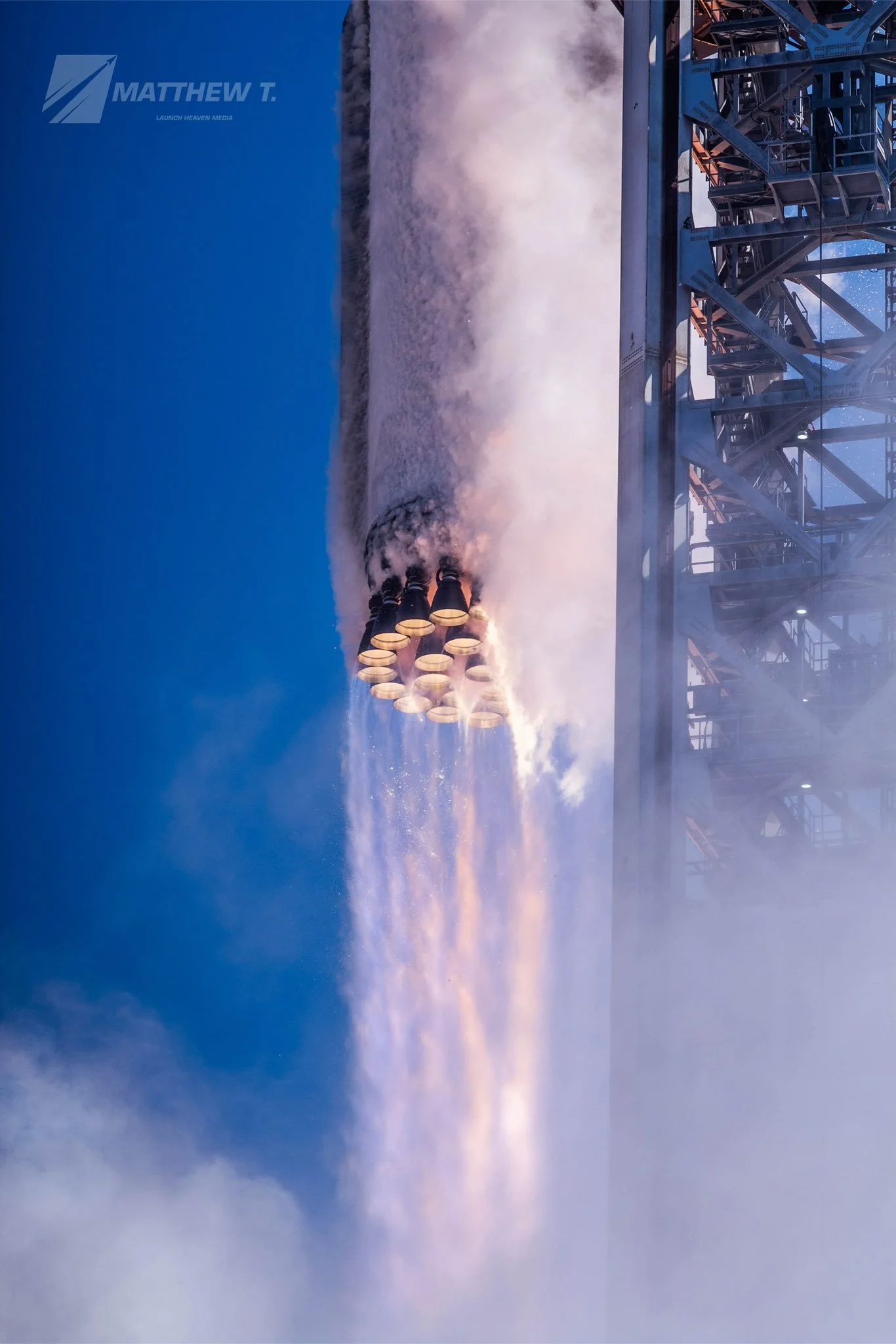
The Booster's primary job is the same as always, a successful launch, ascent, stage separation, boostback burn, and landing burn at an offshore point in the Gulf of America. Getting there this time requires fixing two separate problems. At stage separation on Flight 12, slight differences in engine startup on Ship caused Booster's directional flip to be off by roughly 90 degrees. The engine startup sequence has been rewritten to have a different timing variability, so Booster reliably flips in the direction it is supposed to (to achieve correct orientation for boost back). On Flight 12, after the flip, Booster attempted its boostback burn and five of its 33 engines had trouble relighting, which ended the burn early. The booster flying this week (B20) has hardware modifications aimed at relight reliability, along with updated engine alarms and aborts calibrated to “conditions seen in the multi-engine flight environment” per SpaceX.
Photo: Matthew T. For Launch Heaven Media
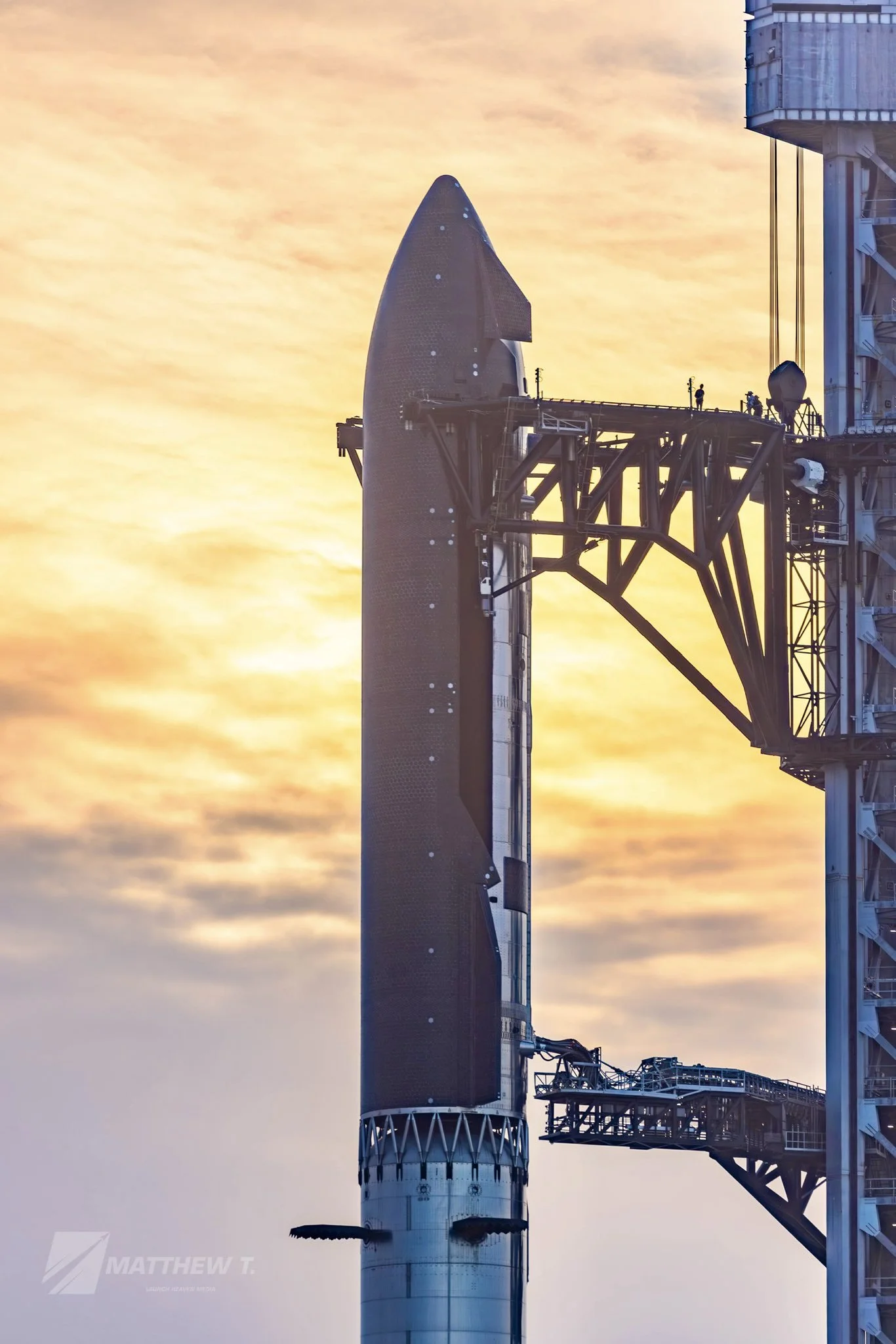
Starship's upper stage has its own list of fixes. Approximately 40 seconds after stage separation last time Ship 39 lost one of its three vacuum optimized Raptor engines, but the vehicle demonstrated its engine out capability by still reaching its planned suborbital trajectory. SpaceX has made several hardware and operational modifications to address the interconnected causes of that failure, with additional reliability improvements planned for upcoming versions of the Raptor engine itself. The upper stage's objectives for Flight 13 are built around proving those fixes actually worked, a relight of a single Raptor engine while in space, and another controlled entry, descent, and splashdown in the Indian Ocean.
Assuming Ship 40 makes it to space with all its engines intact on Flight 13, the vehicle will deploy 20 next generation Starlink V3 satellites, the first time the redesigned satellite has flown at all. Each one will extend its solar arrays, antennas, and then attempt to connect into the broader constellation through high capacity laser links, aiming to test expansion of the network's capacity. Six of them carry something extra, a suite of cameras aimed at Starship itself, just like on Flight 12, scanning the heat shield in the vacuum of space and transmitting that imagery down to operators who are still working out how to judge a heat shield's readiness for a return to launch site landing on future missions. The satellites share Starship's suborbital trajectory, and they are expected to burn up on reentry roughly 20 minutes after deployment.
Photo: Matthew T. For Launch Heaven Media
The heat shield carries its own set of experiments beyond the cameras. Multiple tiles have been attached to the metallic side of Starship's aft flaps, and modified tiles with new attachment mechanisms are being tested in the heat shield covering the aft skirt, all of then gathering data on different ways of holding those critical tiles in place. Load sensing tiles have also been added to measure the higher dynamic pressure Starship will experience on ascent, a condition deliberately accepted in exchange for more payload capacity to orbit.
As is SpaceX’s usual style, Flight 13 will test the iterative designs applied to Starship, granting more data for flight engineers to pour over, analyze, and make changes for future flights. Starship is far from being a mature vehicle. These fights are always dynamic and excitement is definitely guaranteed.
Edited for launch date updates.