USSF-87 Mission
On Feb. 12, at approximately 4:22 a.m. EST, United Launch Alliance’s (ULA) Vulcan lifted off from SLC-41 at CCSFS to deploy its heaviest payload so far, secret military spy satellites into near-geostationary orbit. Everything was nominal until 30 seconds into flight when one of the Northrop Grumman-built GEM 63XL solid rocket boosters (SRBs) experienced a burn through event close to the bottom of its outer shell. The methane burning BE-4s, supplied by Blue Origin, were able to compensate for the loss of thrust from the SRB and Vulcan continued its mission.
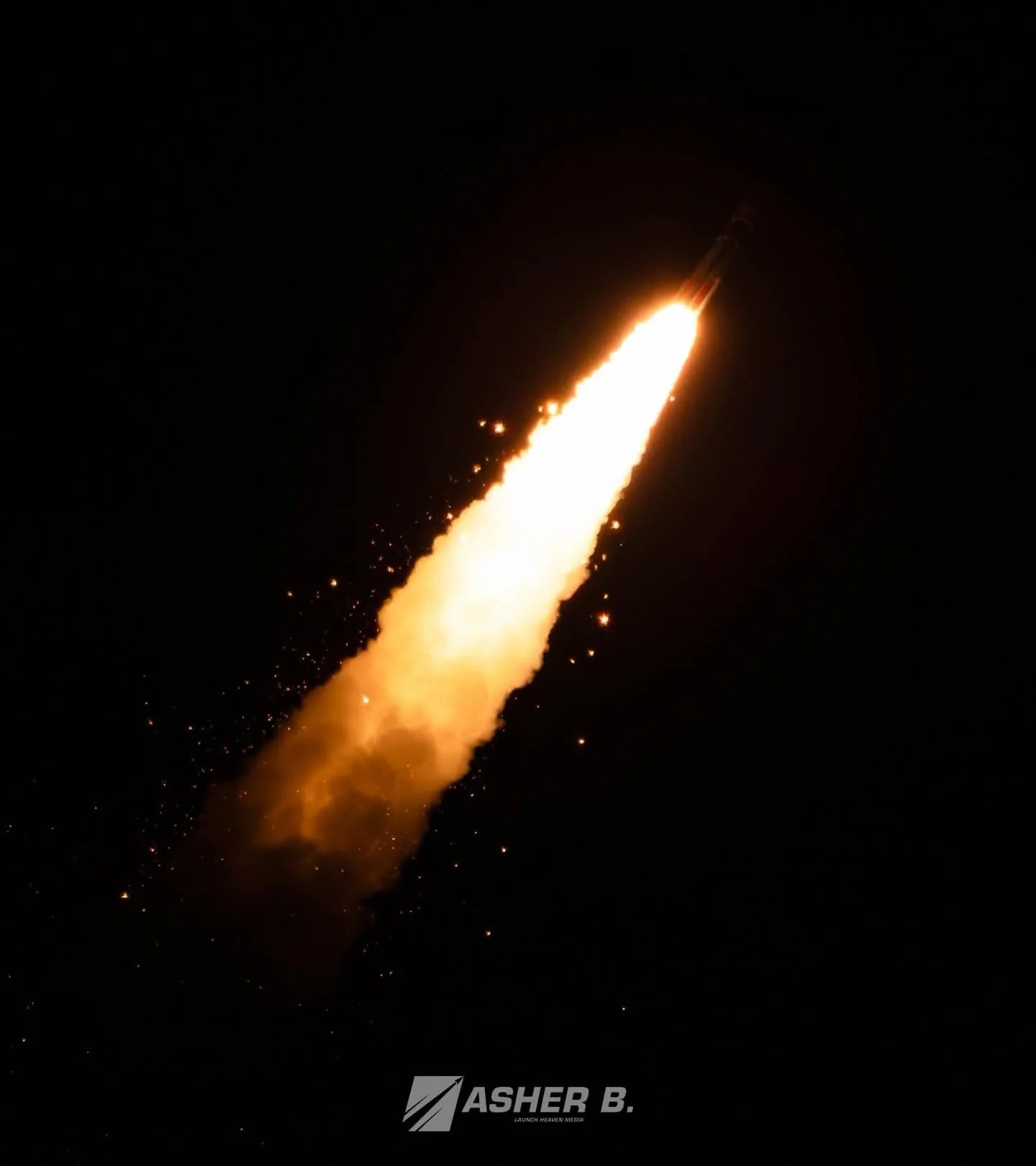
This is the second such event during a Vulcan flight and it speaks to the high quality engineering that’s gone into this vehicle. Both times the payload was deployed successfully and without further complications.
The satellites launched on top of Vulcan are a part of the Geosynchronous Space Situational Awareness Program. These satellites operate as a “high-performance, dedicated Space Surveillance Network sensor… They provide 'neighborhood watch' services in the geostationary Earth arena, improving flight safety for all spacefaring nations operating in that orbit" said in an emailed statement about the USSF-87 mission by Space Force officials. They are also manufactured by Northrup-Grumman. Currently there is one more launch planned in 2027 to complete the program.
Featured Photo By LH Photographer: Mark L.