NASA Completes Artemis II Flight Readiness Review and Sets an Official Launch Date
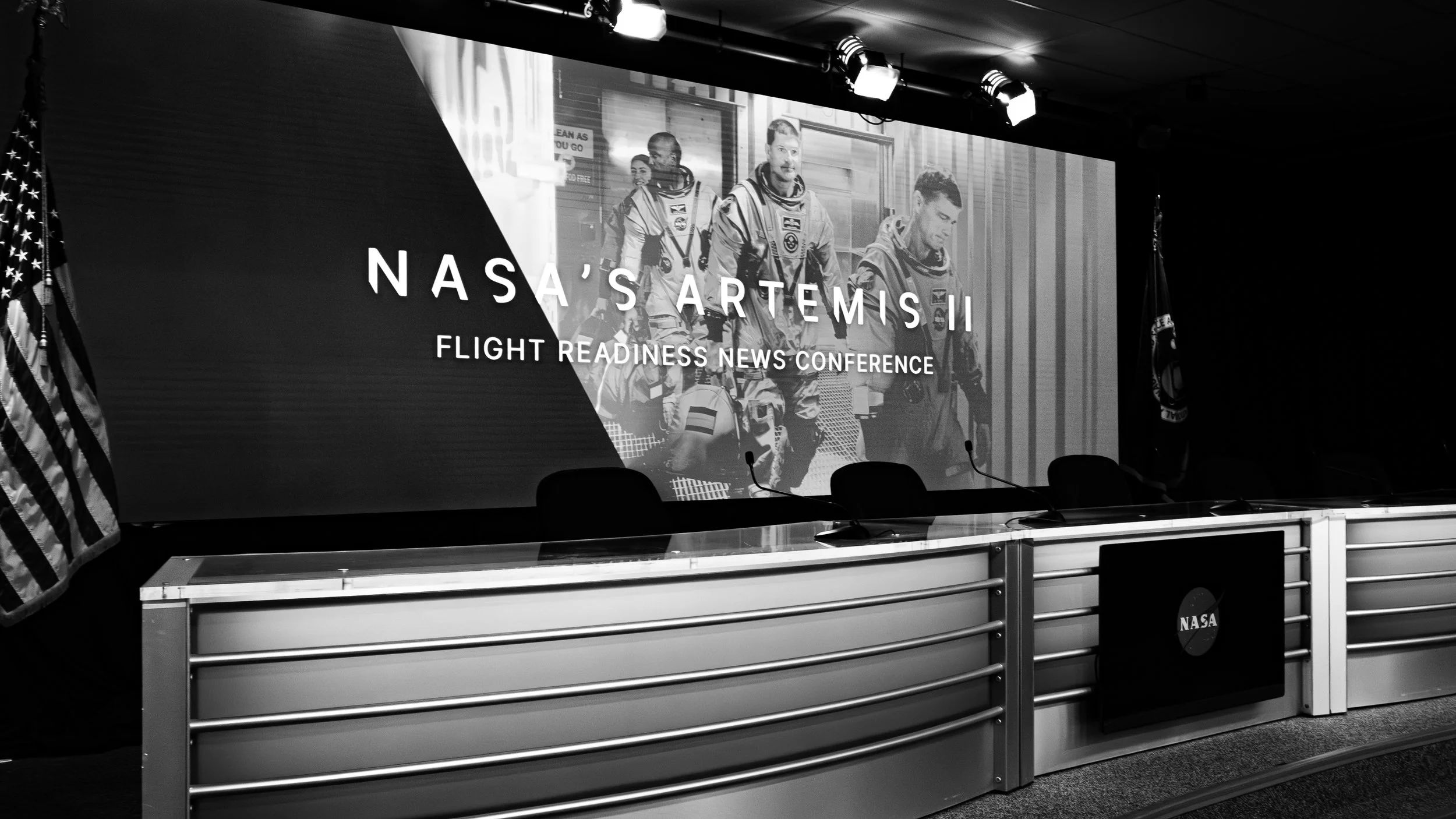
Photo of the NASA News Center Auditorium just after the conclusion of the Artemis II FRR press conference at Kennedy Space Center.
Image: Asher B. / Launch Heaven Media
Last Thursday, March 12th, 2026, NASA held a press conference at Kennedy Space Center to discuss the results of the Artemis II Flight Readiness Review (FRR), as well as take questions from the press about Artemis II overall. The Artemis II FRR is the final big assessment before launch, taking into consideration all the factors that need to be looked at, and then based on the results of all the different criteria, the results are either go, or no-go.
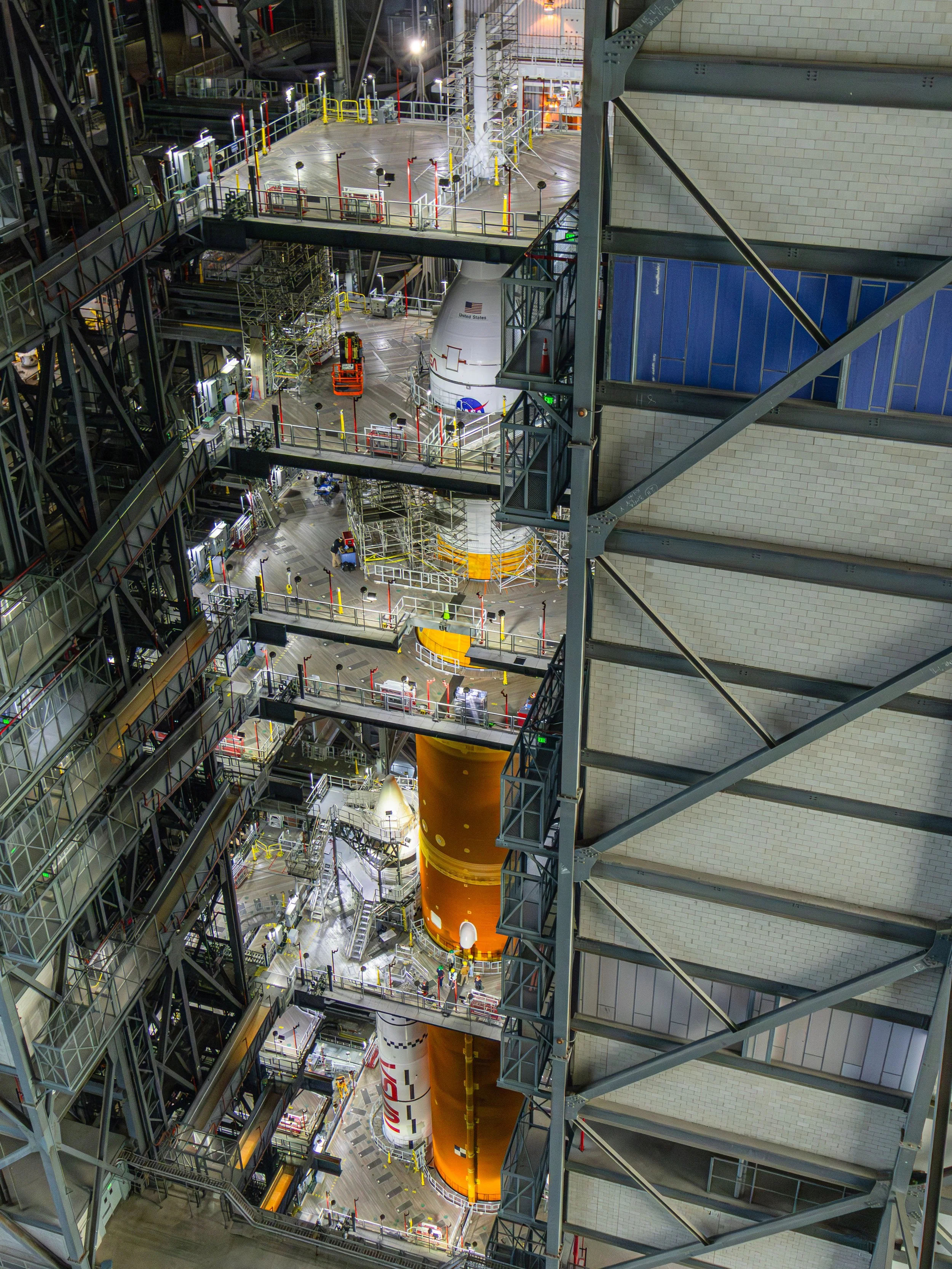
The SLS vehicle in the VAB on February 26th, 2026, with all work platforms extended.
Image: Asher B. / Launch Heaven Media
In the beginning of the press conference, Lori Glaze, the acting associate administrator, as well as Exploration Systems Development Mission Directorate, opened by saying that the teams polled GO for launch of Artemis II. This means that should all the remaining work go well, they are officially targeting no earlier than April 1st for a launch attempt. Of course, there is still quite a bit of work left to go. First, they must roll the SLS and Orion vehicle back out from inside the Vehicle Assembly Building, which is currently targeted for next Thursday, April 19th at the time of writing. This comes after NASA made the decision to rollback the SLS vehicle into the VAB from LC-39B following issues with helium tanks not correctly pressurizing on the Interim Cryogenic Propulsion System (ICPS), the upper stage of the vehicle, just after a fully successful wet dress rehearsal on February 19th, 2026. They are currently wrapping up work on the SLS vehicle, and have already finished work on other systems of the vehicle such as replacing the batteries on the flight termination system (FTS) as well as the Orion launch abort system (LAS).
Also specified in the conference was that they had elected to add a new launch date of April 2nd to the early April launch window that runs from April 1st to April 6th. Prior to this, the 2nd was not listed as a possible launch date. This is the second possible launch window in the early April window that provides a daytime launch, with the first window being the one on April 1st. The rest of the potential launch dates (3rd - 6th) are nighttime launch windows, and the next available daytime launch window is not until April 30th.
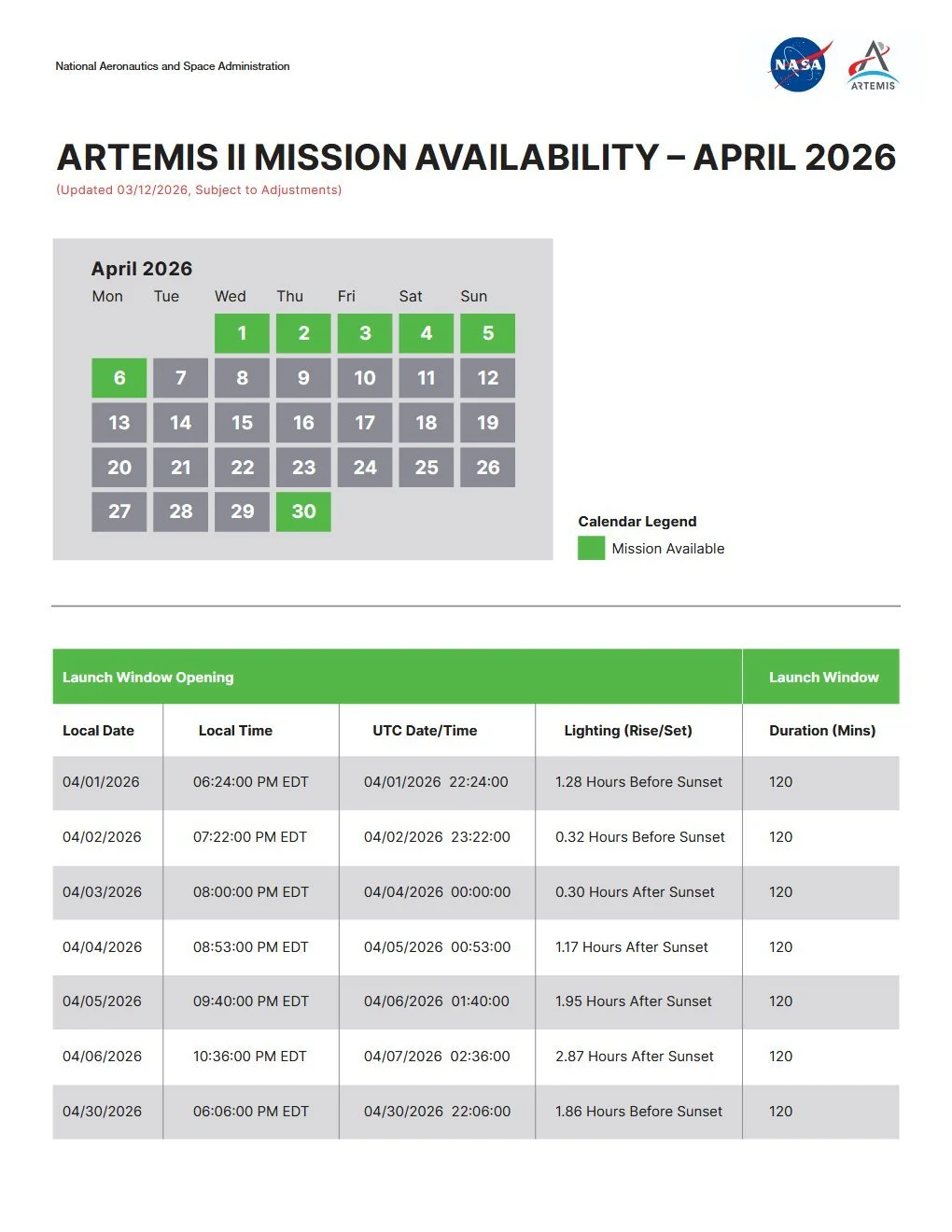
Image of all potential launch dates available in April ranging from April 1st through the 6th, and then again opening on April 30th.
Image: NASA
Regarding the results of the work to the SLS and Orion vehicle done during its time inside the VAB, Shawn Quinn, manager of Artemis ground systems, said, “I was very proud of the team and the work that they did to quickly understand the root cause.” This is a good sign that the vehicle will be in great shape by the time it returns to the pad, and will likely increase the likelihood of it launching on time, even during the first available window on April 1st.
As for the actual root cause, it was revealed to be a displaced seal in a quick-disconnect fitting for helium on the ICPS. To give a bit of background, this came right after the second wet dress rehearsal for the mission, which was a full success. Following the WDR, a press conference was held on February 20, 2026 at Kennedy Space Center to discuss the results. It was announced that, at the time, teams were going to go ahead and proceed forward with a launch as soon as March 6th. However, later that night, once access was restored for personnel to the ICPS, they discovered the issue, and it was an issue that they knew could not be fixed at the pad, and needed to be addressed at the VAB. The morning of February 21, NASA Administrator Jared Isaacman posted on X an initial announcement of the issue, and the need for a rollback. Later that morning, he posted a full and detailed update about the situation, which is linked here.
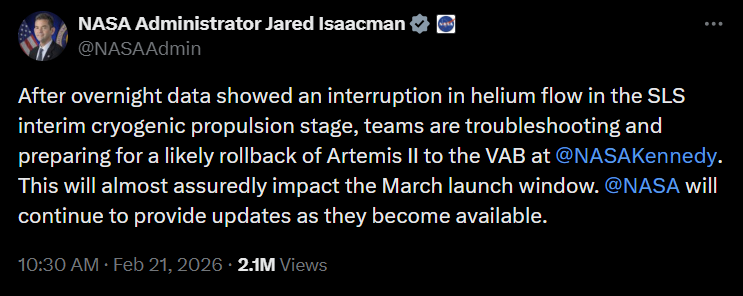
The post NASA Administrator Jared Isaacman made on the X platform announcing the issue with the helium flow.
Image: @NASAAdmin on X
SLS did rollback into the VAB on February 25th, where it remains as of March 15th, 2026. As previously mentioned, NASA is targeting this upcoming Thursday, March 19th from rollout to LC-39B. While at the pad it will not conduct any fueling tests, as teams are fully confident in the seals, and do not feel the need. It was stated at the press conference that they consider these seals to be the best they’ve ever had, and the next time they want to fuel those tanks is for a launch attempt. While at the pad, the final checkouts and preparations will be completed. Overall, the vehicle will have spent just 22 days inside the VAB, which is a huge accomplishment for how much work was done.
The Launch Heaven team will continue to provide consistent coverage of the Artemis II mission, and will be present at the upcoming rollout and launch. Be sure to follow us on TikTok, Instagram, and YouTube under the handle @launchheaven, and on X under @LaunchHeavenX.
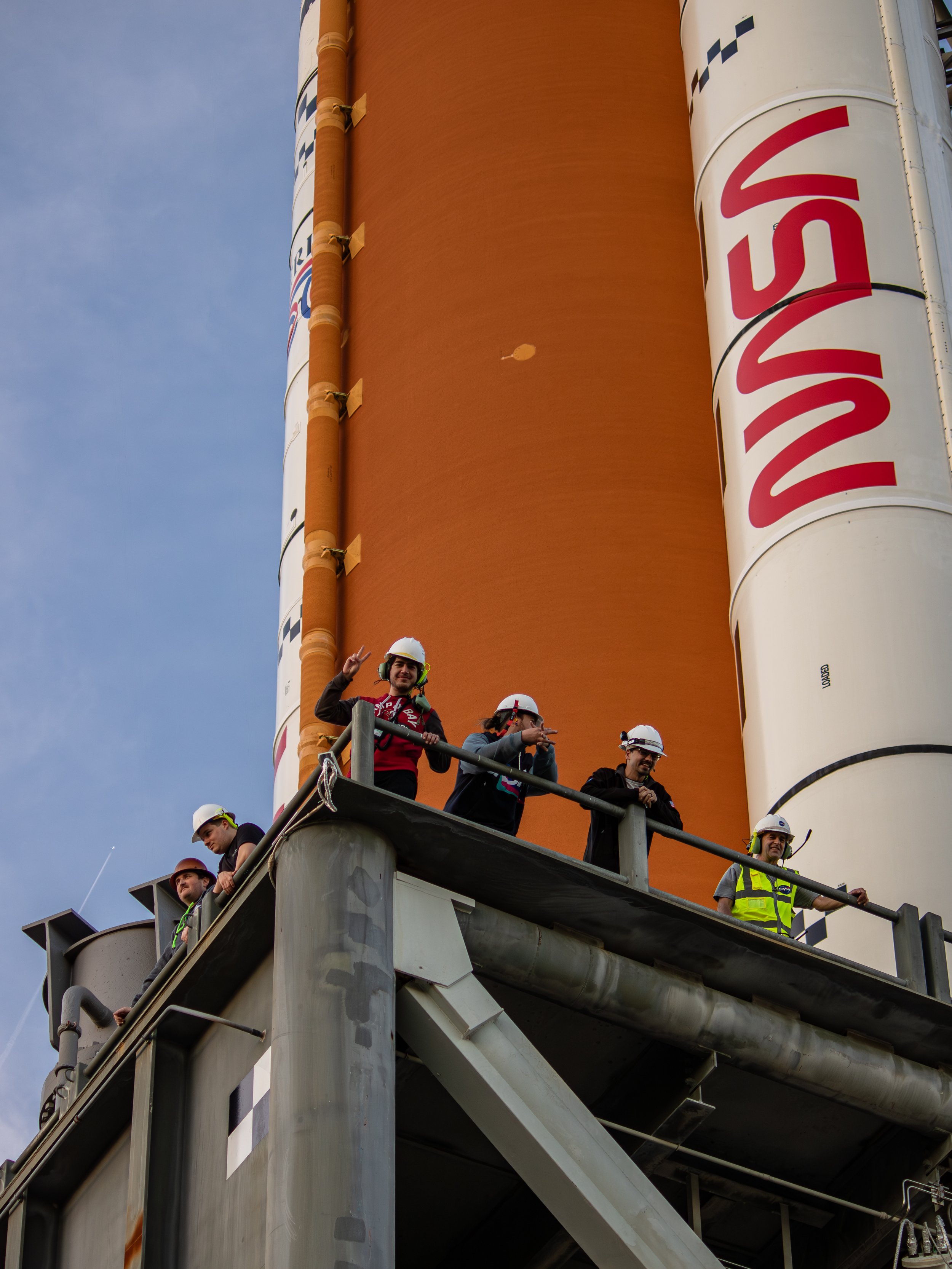
SLS rolling back to the VAB on the evening of February 25th, 2026, with NASA Artemis workers atop ML-1.
Image: Asher B. / Launch Heaven Media