Blue Origin Suffers Second-Stage Anomaly on NG-3 Mission
On Sunday, April 19th, at approximately 7:25 a.m. EDT, Blue Origin launched its New Glenn rocket for the third time from Launch Complex 36 at the Cape Canaveral Space Force Station. This mission achieved the first reuse of a New Glenn booster. The booster nicknamed “Never Tell Me the Odds,” flew for the second time since achieving the company’s first successful booster landing in November of last year.
It was a picture-perfect flight for the first-stage booster, landing on Blue Origin’s ocean-based landing platform named Jacklyn, positioned several hundred miles downrange in the Atlantic Ocean. The booster is expected to be towed back to Port Canaveral in the coming days to begin the inspection and refurbishment process for future missions.
Liftoff, ascent, and stage separation events during the mission were all nominal. The second stage ignited successfully for its first burn, but an issue occurred during the second planned burn which resulted in the upper stage failing to place the payload into the targeted orbit. Blue Origin confirmed via social media that payload separation had occurred and the satellite had powered on, but it was deployed into an off-nominal orbit. As of April 20th, Blue Origin CEO Dave Limp clarified on X that after initial data review, one of the two BE-3U engines did not provide sufficient thrust to make the target orbit and that they are working with the FAA to ensure a thorough investigation and hope to make a timely return to flight.
Tracking data shows that the satellite (AST SpaceMobile’s BlueBird 7) is currently in an elliptical orbit with an apogee of approximately 485 km and a perigee of 265 km, well below the planned 460 km circular orbit. The satellite will be deorbited and burn up in the near future.
It is also worth noting that about 10 days earlier, Blue Origin seemingly experienced an anomaly during a test of a New Glenn second stage at its 2CAT facility on Merritt Island, south of the Kennedy Space Center. The incident resulted in the loss of the stage and damage to the facility roof and the surrounding structure. Luckily no one was injured during this event. It appears that this anomaly is unrelated to the NG-3 launch anomaly.
The BlueBird 7 satellite was designed to deliver direct-to-cellphone connectivity as part of AST SpaceMobile’s planned space-based cellular broadband constellation. While this is a setback for both companies, Blue Origin will surely identify the root cause quickly for a prompt return to flight.
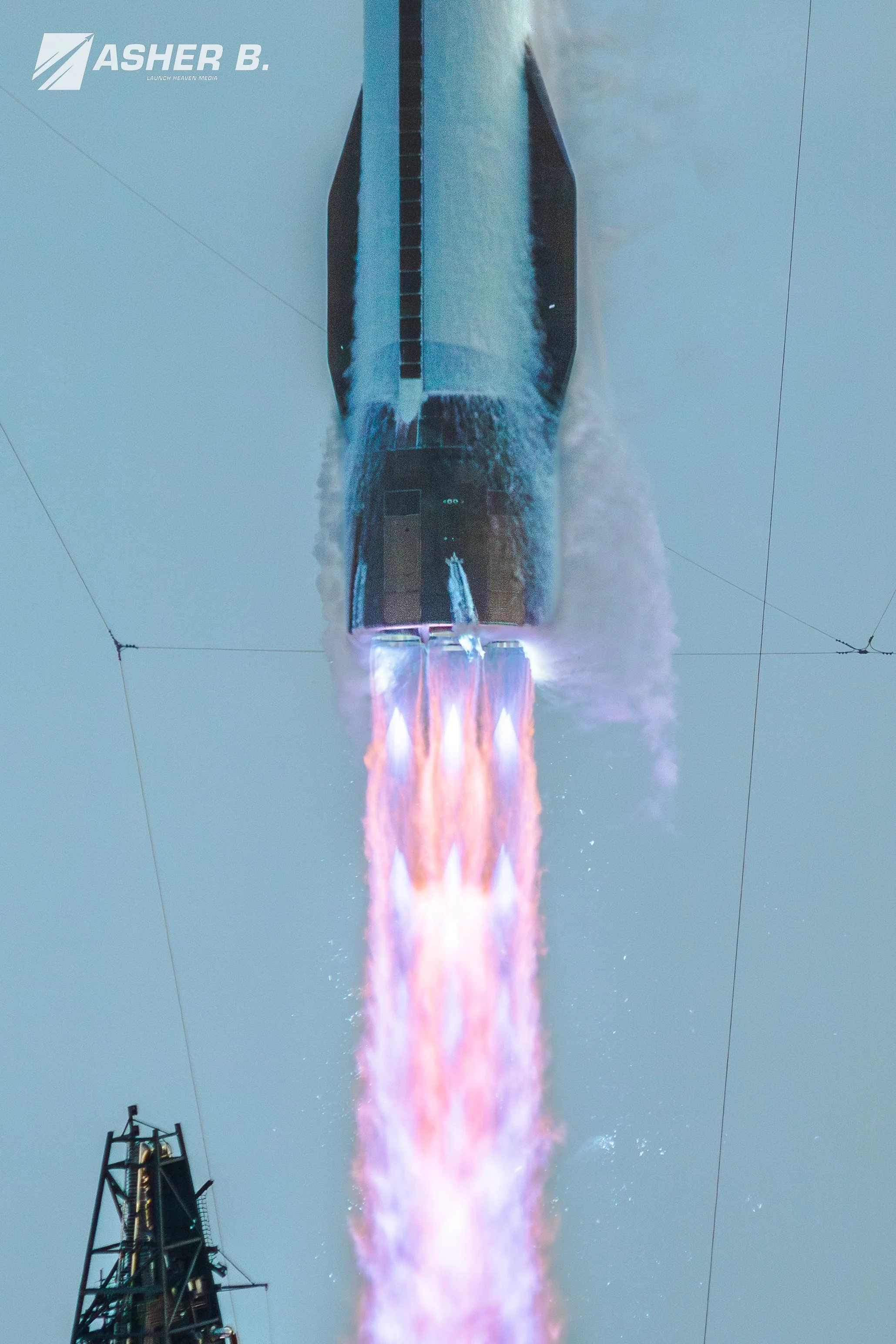
(Photo by Asher B. for Launch Heaven)